


Digital marketing trends 2023
It is worth looking ahead to the marketing trends and developments for the coming year. Which course is digital marketing going to take? What should you watch out for, and how should you adjust to stay relevant? We dived into the trends and have set out the best of them for you below.
A changing online channel mix: video marketing and podcasts
This trend matters a great deal for holding a viewer's attention longer these days. In an ever faster developing ‘always on and on the go’ lifestyle, it is no surprise that content which can be consumed alongside other activities is gaining in popularity. Video is of course the perfect medium for telling a visual story. More and more marketers are therefore using short videos to seek interaction with their audience. Platforms such as Instagram Reels and TikTok are also being used increasingly to raise brand awareness through short videos. The rule of thumb here: the simpler the video, the greater the impact.
These days there is also a podcast on just about every subject. Where listening to podcasts used to be a guilty pleasure, they have now become commonplace. For the commute, while cooking, or during a walk in your break.
One risk of using video marketing or podcasts is that the website itself may be visited less. That is why it is also important to keep the focus on other channels. So the online channel mix is becoming ever more important.
Do you already have your SEO in good order and can you manage without organic posts on social media? Then, as an addition to your existing online channel mix, consider producing bespoke video content for your company in the coming year.
Artificial Intelligence (AI) and Augmented Reality (AR) in the online marketing strategy
Thanks to the rapid development of Artificial Intelligence (AI) and Augmented Reality (AR), we see that consumers have a growing interest in interactive marketing. The need for two-way traffic in online marketing communication has grown again,
with consumers also wanting to be helped more personally, more quickly and more efficiently.
Think of adverts where someone can try something on straight away using AR, or a voice application that lists all the features of a product. There are also AI tools these days that write “human-like” articles or can mimic conversations almost exactly.
AR, AI, chatbots, voice and real-time interactions with the customer are set to become an important part of the online marketing strategy in 2023.
 Augmented reality to see whether a sofa fits in your living room
Storytelling in 2023: human, but backed by data
The art here is to deliver fitting, relevant storytelling with scientific or numerical backing. Two elements that together form one powerful whole. The human, vulnerable and emotional, supported by hard figures and facts.
“Look everyone, we are a company and with our product or service we can meet your need” — that is truly passé. Every company can tell a similar story. What the customer wants to see alongside a good story is proof!
It is better to tell a good, solid story about what you have concretely done and then also show what it delivered for your (potential) customer. Where the storytelling appeals to emotion, the incontrovertible proof reinforces it and is the decisive factor here.
Intent content
In the past it was mainly consumers' needs and expectations that took centre stage. These days, as an online marketer you mostly try to work out what your prospects' intentions are. Instead of the “what” or the “how”, you focus on the “why”. Why does someone have certain needs? Why will they make a particular choice or not, and why will they want something or not?
If you understand the “why” better, you understand the customer better, and that lets you create relevant intent content for your audience. It is also a chance to set yourself apart from your neighbours. While they stay much closer to the surface of the customer's need, you go into the depth.
Do not tell people what you do, but why you do it. And in that way let people feel what your brand means. “Don't tell the world you're a boss, show the world you're a boss!” Make stories with vision and emotion a key element of your online content strategy.
The cookieless era
Something important is changing in mid-2023. From 1 July 2023, roughly 80% less data will come in from your website visitors, in order to safeguard your visitors' privacy. That is down to the new cookie legislation, which from that moment will also be GDPR-proof .
A cookie is a small file of data stored by your computer or mobile device. The cookie means the website ‘remembers’ your actions and preferences. A cookie's most important function is to distinguish one user from another using the stored data. That stored data therefore contains information about you and your search behaviour, and marketers can use it to respond to your personal preferences.
From 1 July 2023, third-party cookies (online marketing cookies) will disappear and first-party cookies (functional and analytical cookies) may only be kept for 24 hours. Previously that period for first-party cookies was 30 days.
The new cookie legislation brings 4 important changes with it:
- No retargeting: it will no longer be possible to reach specific website visitors again with a targeted advert;
- No frequency cap: it will no longer be possible to use a frequency cap to determine how often someone sees your adverts;
- No lookalike audiences: it will no longer be possible to build a lookalike audience from your website visitors. Previously that audience let you reach a new, similar group of potential customers;
- No A/B testing: because cookies are only kept for 24 hours, it is no longer possible to take a sound, objective measurement in an A/B test. From that moment a visitor is seen as a new unique visitor every day and will therefore see variant A of the website one time and variant B the next. That makes for unreliable data.
A few tips from us in advance:
- Take stock of the effects the cookieless era will have on your online marketing activities, your data and perhaps even your organisation;
- Move your current Google Analytics (Universal Analytics) over to Google Analytics 4 (GA4). Google's Universal Analytics version expires on 1 July 2023, because it still tracks third-party cookies, which will no longer be permitted from that date;
- Start thinking about your new way of working. How are you going to collect the data you need? Make a start on gathering customer data by capturing email addresses, for example.
One more small tip: an alternative way to reach a lookalike audience in future is the option to upload email address or customer lists to advertising platforms. That allows the advertising platforms to assemble and target a comparable group.
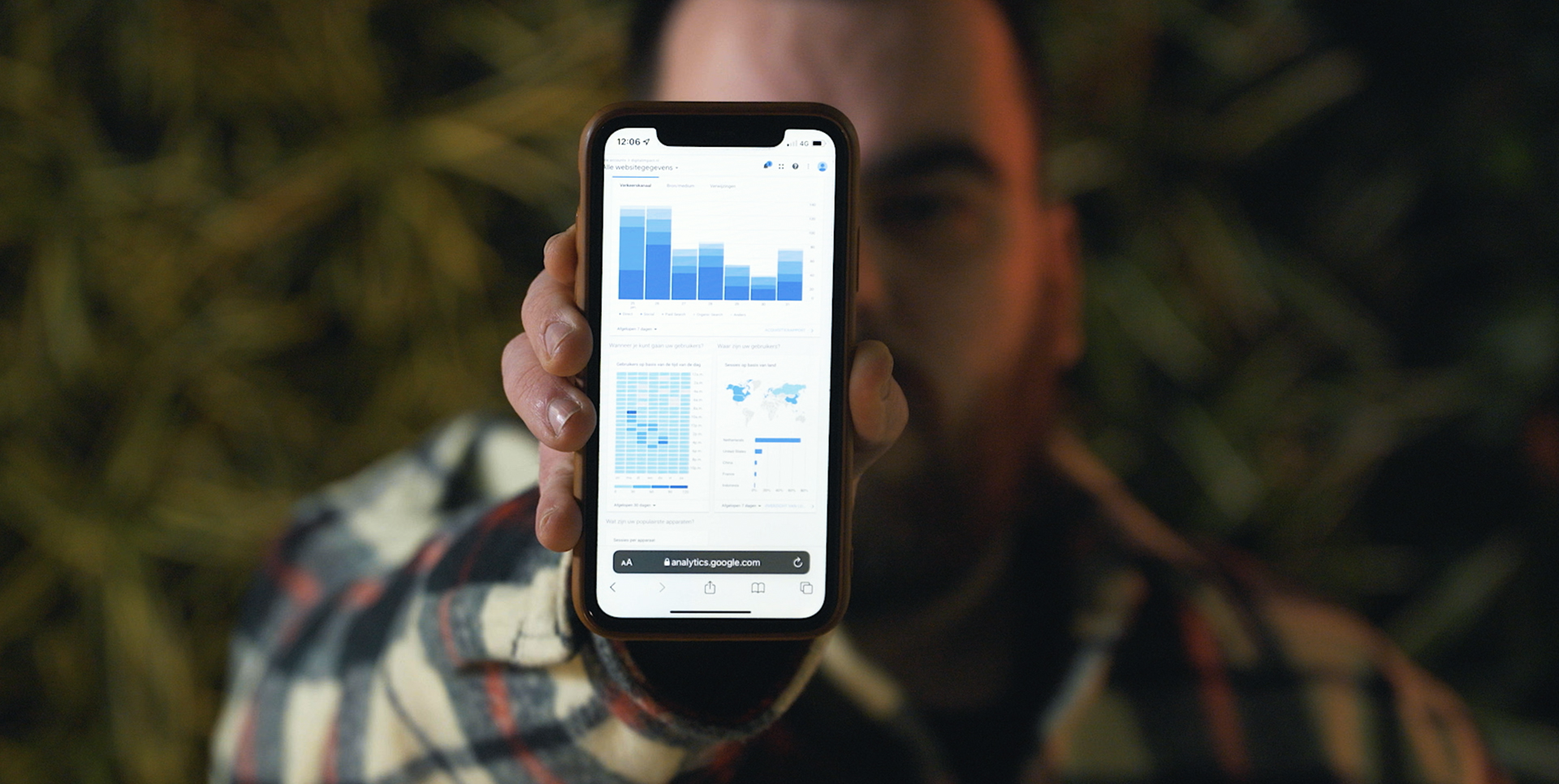 The new cookie legislation brings a lot of changes with it
Diversity and inclusion (DEIB)
Have you come across the term DEIB yet? It stands for Diversity, Equity, Inclusion and Belonging. Today it is more important than ever to make sure your marketing strategies are culturally diverse and do not offend (part of) your audience.
A study by Facebook shows that 54% of consumers do not feel (sufficiently) culturally represented in online adverts, and 71 per cent of consumers expect companies to take diversity and inclusion into account in their marketing strategies. So it is becoming ever more important to think carefully about how you work DEIB into your online marketing strategy and communications.
The advantages of DEIB marketing are:
- Your company makes a positive contribution to promoting diversity and inclusion.
- If you succeed with a wider audience, more people will trust your brand, value your sincerity and therefore ultimately buy from you.
Those were a few tips and tricks you can take with you to step into 2023 that little bit smarter. There are of course many more aspects that will change and may have an impact on your (digital) business proposition. We understand better than anyone that this is complex. No worries! Digital Impact can support you in this process so that you have nothing to worry about. Get in touch with no obligation to discuss the possibilities.
Written by

Patrick Bosters · Digital Consultant